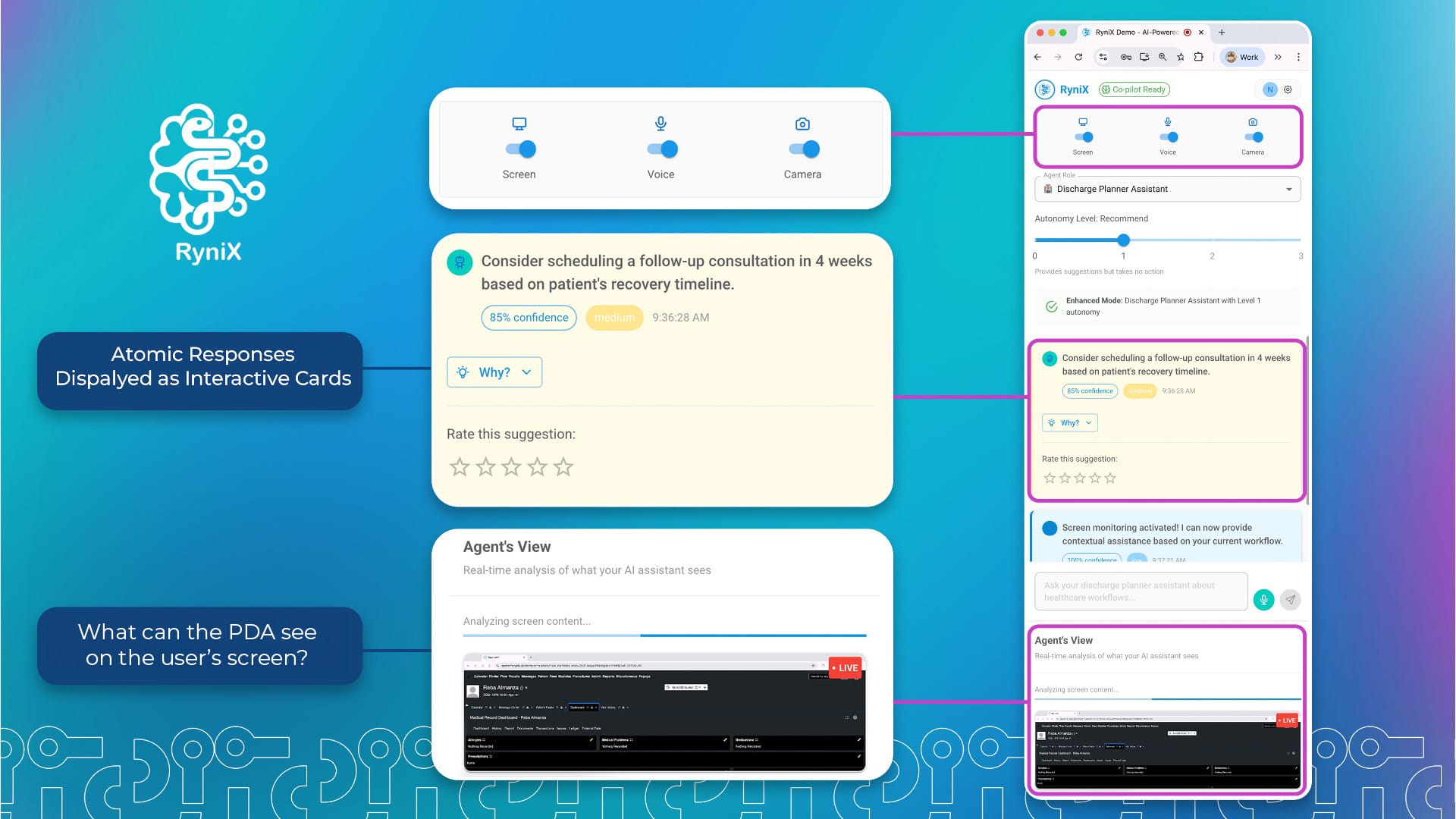
RyniX runs beside any EHR. It reads the screen, surfaces explainable Atomic Response Cards for discharge planning and readmission risk, and learns your decision style. Per physician, per hospital.
Existing tools digitize paperwork or move beds. None of them support the clinical decision of whether the patient is actually ready to leave. The result is $200B/year in preventable U.S. care waste, and a double-pain zone for hospitals.

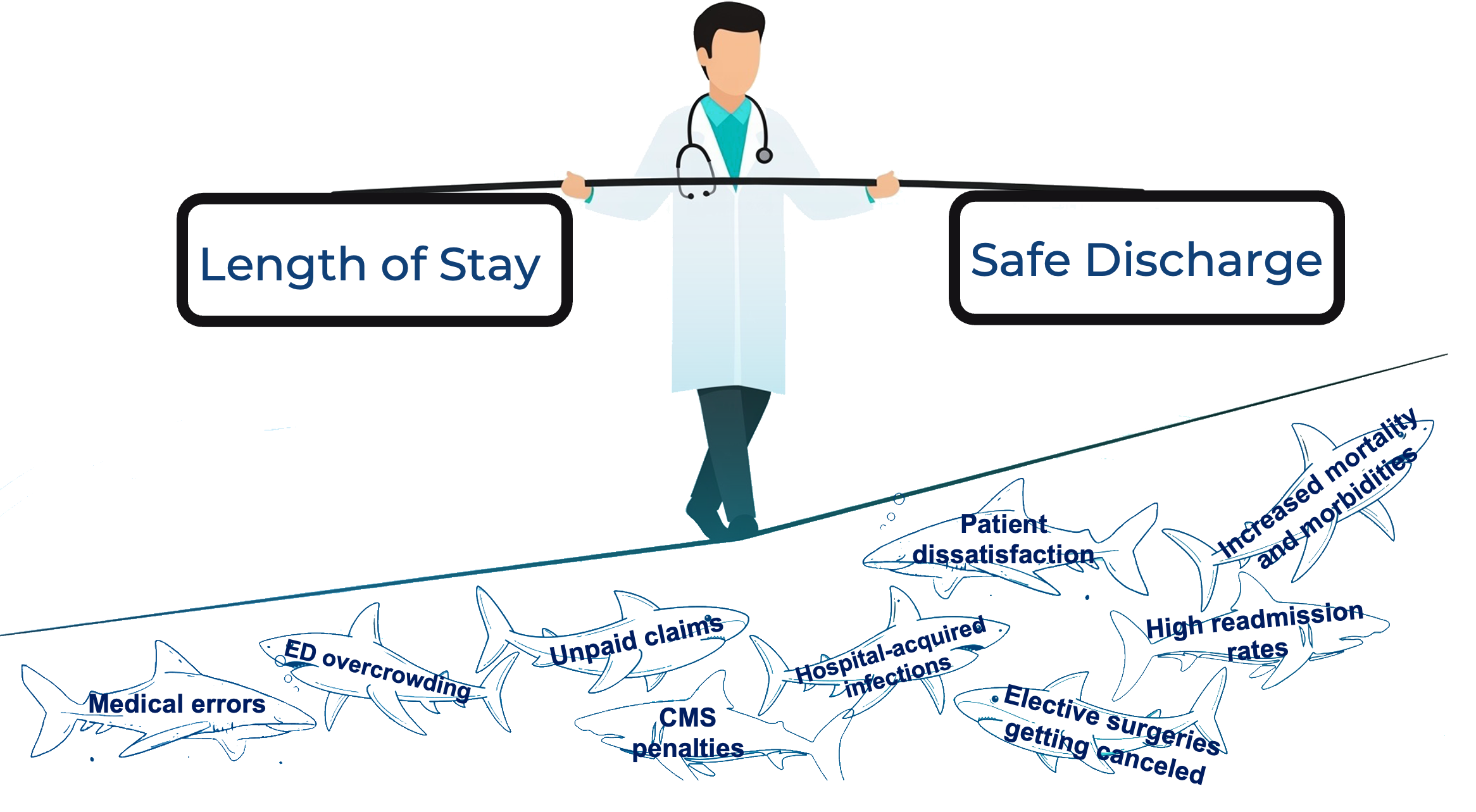
Physicians walk a daily tightrope. They balance the pressure to reduce length of stay against the critical need for safe discharges. RyniX provides the stability and intelligence to navigate these high-stakes decisions, preventing readmissions and protecting patient safety.
"Current tools ease paperwork but fail to solve the real bottleneck: medical decisions."
Unlike workflow tools that move operations, RyniX solves the decision-making bottleneck at the point of care, with privacy-first intelligence.
Optimize discharge timing
Identify high-risk patients
Restore clinical autonomy
Every recommendation is structured: confidence, urgency, "Why?" expansion, and a 0 to 5 star rating. Patent 3, Transparent AI Clinical Reasoning.
Learns your practice patterns, your hospital's protocols, and the federated insights from similar cases. The more we know you, the better we answer.
Four-level control: Observe, Recommend, Assist, Automate. You set how much agency the AI has. We are an Aide, never an autopilot.
Works on Epic, Oracle Health, MEDITECH, Cerner, NextGen, athenahealth, and legacy systems. Differential screenshot processing reduces transmission by 99.5%.
Federated learning enables collaborative AI without centralizing patient data.
Atomic Response Cards show exactly why RyniX recommends each action.
Individual clinician interactions stay completely private from administrators.
Proven economics: under 12-month payback with $20M annual savings potential.
An illustrative estimate of the impact of reducing length of stay and preventing readmissions. Adjust the inputs for your hospital.
* Assumptions: 85% occupancy · 0.5 day average LOS reduction · $1,200 conservative value per freed bed-day · $15,200 average cost per readmission (CMS) · 10% relative reduction in readmissions. Illustrative estimate only, not a guarantee. Actual results vary by hospital.
Surfaces evidence-grounded recommendations at the point of care without breaking flow.
Seed focusPulls hospital pathways + ACC/AHA/ESC guidelines into the moment of decision.
v3.0Care-team coordination across nursing, pharmacy, social work, cardiology.
v3.5In-context specialist referral with the case already framed for them.
v4.0Draft order sets matched to hospital formulary and patient comorbidities.
v4.5The signature use case. Patient-specific discharge plans plus 72h follow-up.
Seed focusNo EHR integration, no IT rip-and-replace. The sidebar runs alongside Epic, Oracle Health, MEDITECH, Cerner, NextGen, athenahealth, or legacy systems.
Local anonymization before any cloud transmission. PHI never leaves your firewall. Patent-pending universal capture layer (Patent 7).
Multi-institutional collaborative training. Raw patient data stays at each hospital. The model gets smarter for everyone without anyone sharing data.
A 90-day Proof of Value engagement at $75K to $125K. Average payback under 12 months at a 425-bed hospital. Federated learning means your data stays inside your firewall.